

Lent: A Sacred Season for Franciscans


On February 18, Christians begin the sacred season of Lent in this year of grace 2026.
Early Franciscans considered themselves part of the great penitential movement of their times: men and women who were trying to hear the Gospel afresh and turning their hearts more deeply to the coming of God’s Kingdom. Therefore, the liturgical season of Lent, dedicated as it is to a profound conversion of mind and heart, naturally occupied a special place in their lives.
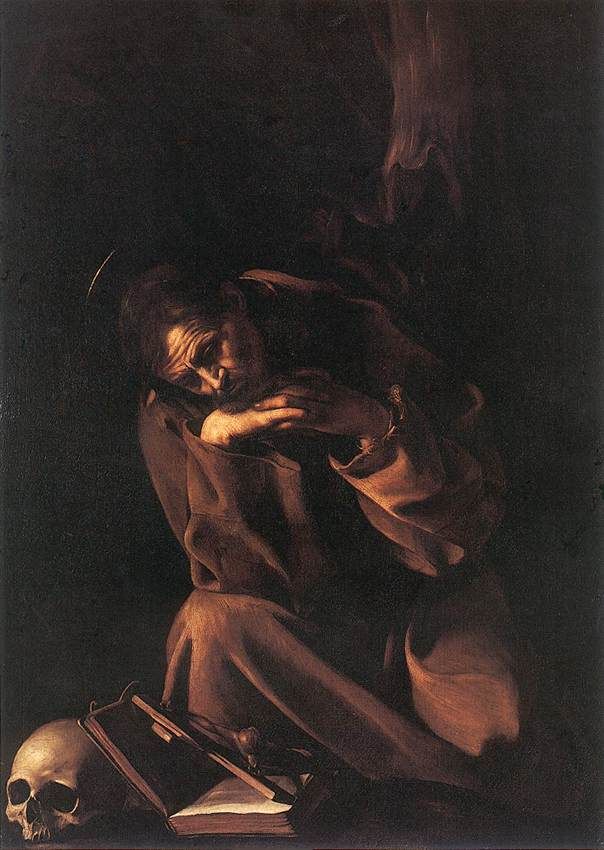
Caravaggio, St. Francis in Meditation, Italian, 1606, Cremona, Museo Civico Ala Ponzone
And so, we see that the Lenten practices of medieval Catholics naturally find their place in the early Franciscan rules (Friars Minor, Poor Clares, and lay penitents). Prominent here is fasting, which at the time was viewed not so much as an act of individual ascetism, but a communal discipline that bonded the faithful. In the Middle Ages this entailed not only abstinence from meat, but meat fats and dairy products as well, for the Lenten period.
We know that Francis himself almost always retired for the season of Lent with a few brothers to a hermitage—his favorites were La Verna and Greccio—where he could reflect on how God was asking him to deepen his commitment in terms of the ever-changing situation of his life. “When blessed Francis stayed constantly in a place to pray . . . he was always anxious to know the will of the Lord, about how he could please him better” (Assisi Compilation, 118).

The sanctuary and hermitage at LaVerna

The hermitage at Greccio
Franciscans still continue to practice Lenten disciplines, even though most of us, committed to many activities, do not take on the burden of physical penances or have the time to spend all of Lent in a hermitage. Yet the challenge for us is still there to create sufficient mental space during this sacred season to “go apart” from our numbing daily activities to discern God’s continuing call, to “know the will of the Lord, how we might please him better.”

A grotto at LaVerna

Isola Maggiore, Lake Trasimeno, Italy, where Francis spent Lent one year, probably in 1211. The castle there is a 19th century structure on the site of a medieval friary. (Wikimedia Commons)
Francis's call still comes to us: “Do penance, performing worthy fruits of penance: Give and it will be given to you. Forgive and you shall be forgiven. If you do not forgive people their sins, the Lord will not forgive yours. Confess all your sins. Blessed are those who die in penance, for they shall be in the kingdom of heaven . . . Beware of and abstain from every evil and persevere in good till the end” (Earlier Rule, 21).
The challenge is ours.
Main image: Orazio Gentileschi, San Francesco (detail), 16-17c., Wikimedia Commons

Dominic Monti, OFM
Professor of Franciscan Research in the Franciscan Institute of St. Bonaventure University
Dominic V. Monti, OFM, is a Franciscan Friar of Holy Name Province (USA) and currently professor of Franciscan Research in the Franciscan Institute of St. Bonaventure University. He devoted the greater part of his ministry to teaching the History of Christianity, in particular the history of the Franciscan movement. He has contributed two volumes to the Works of St. Bonaventure series and is author of Francis & His Brothers, a popular history of the Friars Minor.